Licensing your images is as important as making them. Clear licences protect your work, set expectations and keep clients safe from legal risk. This guide breaks down how licensing works — from common usage rights to practical contracts — so photographers can safeguard their creativity and clients can use images confidently and legally. We’ll cover license types, standard agreements, stock photo rules, key legal checks and how to book a shoot with proper licensing in place.
Usage rights are the permissions a photographer grants a client for using a photo. They’re the legal boundaries that protect the photographer’s copyright while giving the client clear permission to publish or distribute images. Get these terms wrong and you can face disputes, unexpected fees or damaged relationships. Clear usage terms keep everyone aligned about where, how and for how long an image can be used.
Usage rights shape income, control and reputation for photographers, and set practical limits for clients. For photographers, the licence type affects future sales and exclusivity. For clients, sticking to the agreed usage avoids infringement claims. Open communication about scope and limits builds trust and prevents most problems before they start.
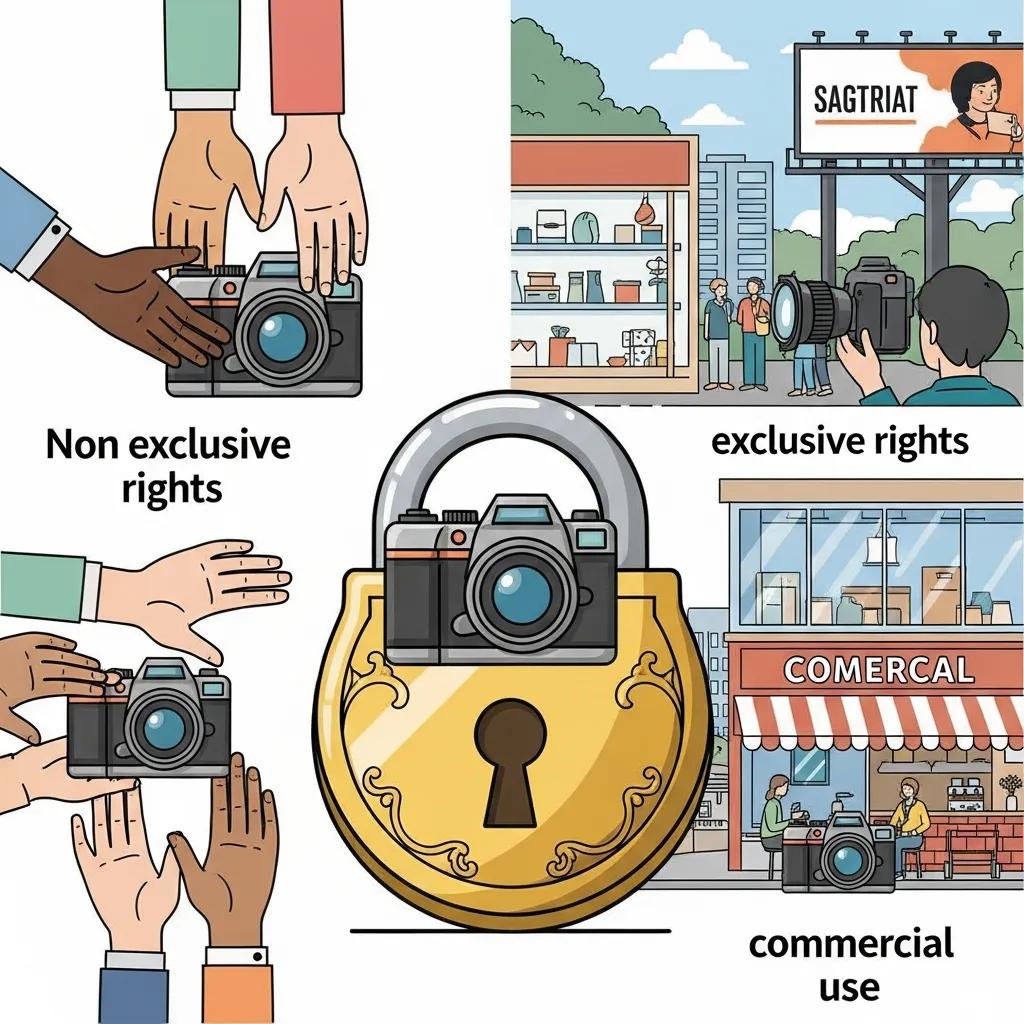
Here are the licences you’ll encounter most often:
Knowing these categories helps you agree terms that suit the project and protect future opportunities.
Licensing agreements are legal documents that set out who can use an image, how, where and for how long. Familiarity with these contracts helps both sides avoid misunderstandings and legal headaches.
An exclusive licence gives one client sole rights to an image for the agreed scope and period. A non-exclusive licence lets the photographer licence the same image to multiple clients. The choice affects price, marketing opportunities and long-term value of the image licensing.
Contracts usually state the permitted uses (print, web, social), geography (UK, EU, worldwide), duration (campaign length or perpetual) and any usage limits (number of impressions, runs or placements). Clear definitions make renewals and extensions straightforward.

Stock licensing lets clients buy image rights from a library rather than commissioning a shoot. It’s a convenient option for businesses that need professional visuals without negotiating bespoke contracts for every image.
Royalty-free (RF) images are bought once and used across multiple projects (within the licence terms) without paying again. Rights-managed (RM) images are licensed for specific uses — price varies with duration, territory and medium. Choose RF for flexibility and RM when you need controlled exclusivity or specific usage limits.
Match the licence to your needs: consider intended use, budget, campaign length and distribution. Read the licence terms carefully — some RF licences still limit sensitive uses or require attribution. When in doubt, ask the provider for clarification or a tailored licence.
Legal checks protect both photographers and clients: confirm copyright ownership, secure model/property releases, and be explicit about permitted uses and liabilities in the contract.
Model releases give written permission to use a person’s likeness for commercial purposes. Without them, commercial use can trigger privacy or publicity claims. Always collect signed releases for identifiable people when the images will be used commercially.
UK copyright gives creators exclusive rights to reproduce, distribute and display their work. That means photographers typically control licensing terms unless they’ve assigned rights. Keep an eye on legislative updates and guidance, since changes can affect how licensing images are drafted and enforced.
At EyeMedia Studios we start with a brief to understand your objectives and usage needs. We then draft a contract that spells out the session details, licensing scope and fees. Once terms are agreed and payment is made, the shoot is confirmed. This process keeps permissions clear from day one.
Fees depend on photographer experience, shoot complexity and the licence scope (exclusive vs non-exclusive, territory and duration). We provide transparent quotes that separate creative fees from licensing costs so you know exactly what you’re paying for.
Case studies and portfolios show how licensing terms were applied in real projects and what outcomes clients achieved.
Portfolios often note whether an image was licensed exclusively or for editorial use, and may highlight campaigns with bespoke licensing. These details demonstrate a photographer’s commercial experience and contract clarity.
Changes to UK copyright and related regulations occasionally affect licensing practice. Photographers and clients should monitor updates that influence model releases, digital use rights or cross-border licensing to stay compliant.
Licensing can feel complex, but with clear agreements and the right advice both photographers and clients can work confidently. EyeMedia Studios combines creative craft with practical licensing guidance so projects run smoothly and legally — from brief to final delivery.
Include the scope of use (channels and media), geographic territory, duration, payment terms, exclusivity, and any usage restrictions. Add clauses for model and property releases, liability limits and dispute resolution. Specific, written terms cut down on ambiguity and future disputes.
Read the licence carefully before signing, keep a copy of the agreement and any supporting releases, and stick to the permitted uses. If your needs change, ask for a licence extension or amendment in writing rather than assuming broader use is allowed.
Misuse can lead to copyright claims, financial penalties and reputational harm. Remedies vary: the photographer may seek damages, demand removal, or terminate the licence if breaches are specified in the contract. Prevention — clear terms and regular checks — is the best strategy for licensing images.
International use introduces additional rules: different countries have varying requirements for copyright, moral rights and releases. When images will be used abroad, specify territory in the licence and consider local legal advice to ensure compliance.
Start by reviewing the agreement and communicating openly with the other party. Many disputes resolve through clarification or negotiation. If that fails, seek legal advice or consider mediation/arbitration as alternatives to court. Keep records of all communications and actions, including licensing images.
A licence can usually only be revoked if the agreement includes termination conditions or the client breaches the terms. Photographers should state clear termination clauses; clients should understand which actions could trigger revocation and licensing images.
Licensing protects creativity and gives clients the confidence to use images legally. Learn the common licence types, secure the right releases, and put clear terms in writing. EyeMedia Studios is here to help you through that process — delivering strong visuals with licensing that protects everyone involved. Get in touch to discuss your next project and the licence that fits it best.