
Getting your pricing right is essential if you want a profitable, sustainable photography business. This guide walks through practical pricing models, how to calculate true costs, and tactics you can use to set rates that reflect your value. Price affects not just your income but how clients perceive you — under‑pricing can erode your brand, while poor costing can squeeze your margins. Below you’ll find straightforward frameworks for pricing, cost calculations you can replicate, and considerations for different client types.
Picking the right pricing model helps match your services to client expectations and market norms. Common options are fixed fees, hourly rates, and packaged offers. Each has strengths and trade‑offs depending on the job type and who you’re serving. Understanding these will make it easier to choose a system that supports your business and makes sense to clients.
Each pricing model behaves differently in practice:
Use fixed fees for clear, repeatable work; hourly when scope is uncertain; and packages when you want to upsell a predictable bundle.
Certain services naturally pair better with particular models. Portrait and family shoots often suit package pricing — clients like clear options that bundle prints and digital files. Commercial and product shoots commonly use fixed pricing because deliverables and licensing are explicit.
Many photographers mix models: for example, offering core wedding packages while charging fixed rates for extras like engagement sessions or albums. That mix gives clients choice while protecting your margins.
Accurate costing underpins profitable pricing. You must capture direct expenses, your time, and the overheads that keep the business running. Once you have those numbers, you can set prices that cover costs and deliver the profit you need.
Include these when you total your project costs:
Listing these items gives a realistic baseline for pricing every job.
Follow a simple process to fold costs into a usable price:
This method keeps your pricing transparent and repeatable.
Pricing strategically means knowing your audience, the competition, and the value you deliver. Combine market research with honest cost accounting and a clear sense of your brand to arrive at rates that sell and sustain your business.
To pick a suitable profit margin:
For example, if your total cost for a job is £500 and you target a 30% margin, set the client price at £650.
Real examples help. A commercial shooter can command higher fees from brands because of licensing and reach, while a portrait photographer might use tiered packages and occasional discounts to keep steady bookings. Look for peers whose target clients match yours and study how they package, present and justify their prices.
Takeaway: adapt proven approaches to your niche rather than copying rates outright.

Different clients have distinct priorities. Customise packages so they meet those priorities while protecting your margins. Clear tiers and optional add‑ons make decisions easy for clients and predictable for you.
When working with actors, models or other professionals, consider:
Design packages that reflect these priorities and make the licensing terms explicit.
Commercial clients typically expect broader rights and faster delivery and often involve bigger teams and logistics. That justifies higher fees and formal contracts. Individual clients usually need limited usage and simpler terms, so packages can be more straightforward and price‑sensitive.
Match your pricing structure to the complexity and value of the project to avoid undercharging.
A smooth booking and payment flow reduces friction and improves conversions. Clear steps, easy payment options and good communication make clients more likely to book and return.
Simplifying booking removes friction and increases the chance a lead becomes a paying client. Practical steps include:
Little conveniences add up to a better client experience and more completed bookings.
Make it easy to pay and be clear about terms:
Flexible, clearly communicated payment options improve client trust and reduce late payments.
Photography Business Consultant & Photographer
Alex Rivera has spent more than 30 years helping photographers build sustainable, profitable businesses. Specialising in pricing, marketing and client relationships, Alex has worked with hundreds of photographers across commercial and consumer markets. Their advice appears regularly in industry outlets and workshops, focused on practical steps photographers can use to earn more without compromising quality.
Consider your target market, the type of work you do, and what makes your offering different. Add up your costs — equipment, time and overhead — and compare with local market rates. Finally, think about perceived value: how clients view your work will influence what they’re willing to pay.
Build a professional website and showcase a focused portfolio. Use social media to share recent work and client stories, and apply basic SEO so people can find you. Network locally and offer referral incentives to encourage word‑of‑mouth. A clear pricing page or a simple pricing calculator can also help convert prospects.
Include scope of work, deliverables, price, payment schedule and deadlines. Add clauses for image usage rights, cancellations, refunds and liability limits. Also state how and when clients will receive their photos. A clear contract protects both parties and reduces misunderstandings.
Start by listening and acknowledging concerns. Explain the value behind your price — experience, turnaround, quality and included services. Offer alternatives like scaled‑back packages or payment plans if appropriate, but be prepared to stand by your rates if they reflect your costs and quality.
Common errors include underpricing, ignoring full costs, and failing to update prices as skills improve. Offering discounts too freely can also erode perceived value. Regularly review your pricing to ensure it reflects experience, market shifts and real costs.
Start with client needs and bundle complementary services — for example, a session plus prints or multiple retouched images. Show clear benefits and savings versus à la carte pricing. Use seasonal or themed packages to attract different audiences, and present packages visually so they’re easy to compare.
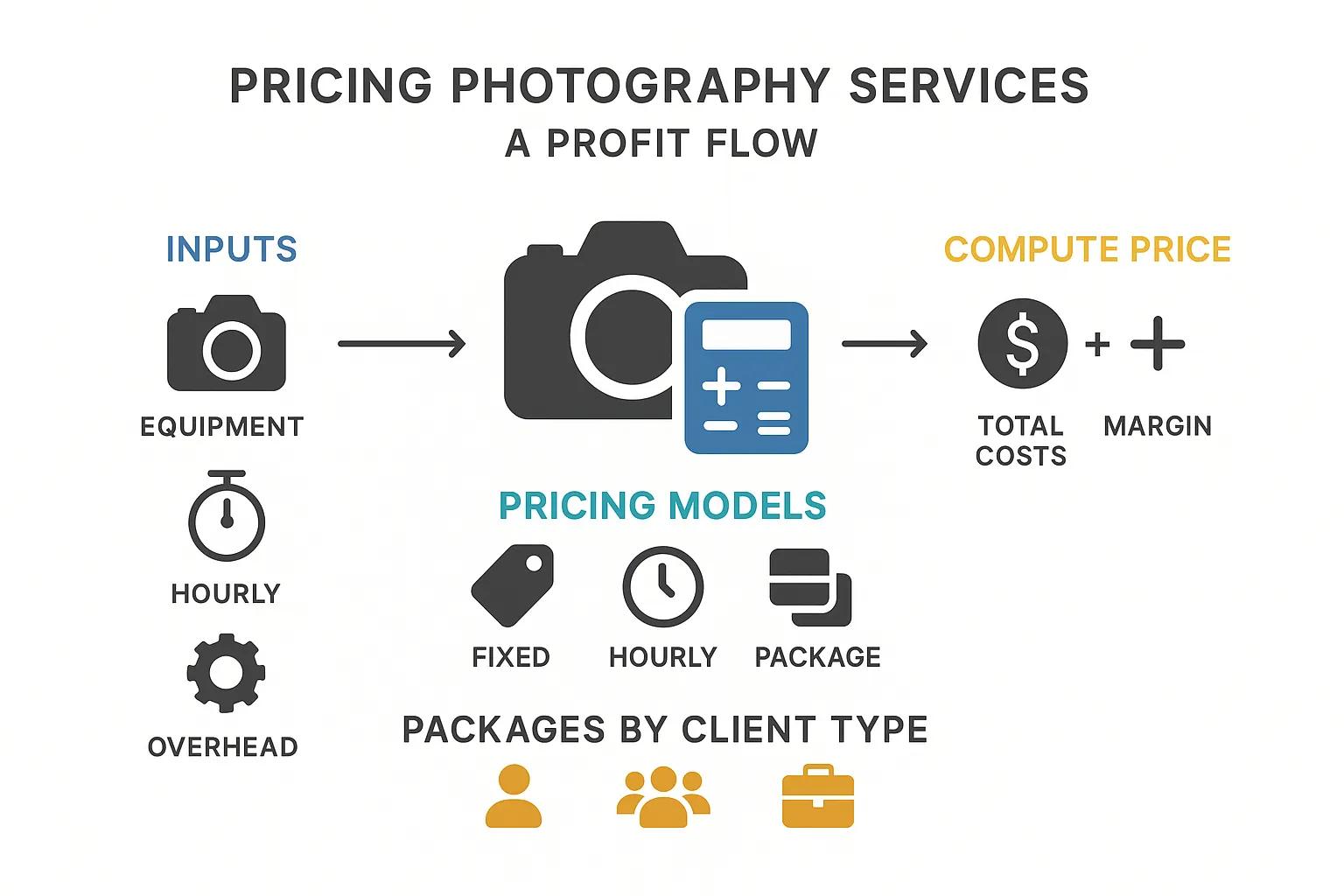
Setting the right prices for your photography services is crucial for building a sustainable and profitable business. By understanding various pricing models and accurately calculating your costs, you can create packages that reflect your value while meeting client needs. This strategic approach not only enhances your brand perception but also ensures you maintain healthy profit margins. Start implementing these pricing strategies today to elevate your photography business to new heights.